

The Differences Between 1965 and 1966 Mustangs
Last Updated May 28, 2024 | Meghan DrummondThough the Mustang debuted in 1964, 1965 is when the wheels really started rolling. Not only was it the year with the highest number of Mustangs sold ever, but it was also the first year where Shelby and GT options were available. In 1965 and 1966, GT very specifically referred to an option package that was only available in combination with the higher powered V8 engines.

Unfortunately, Marti Reports, a kind of birth certificate for Mustangs, aren’t available for any cars produced before 1967. This means that enthusiasts have to know their classic Mustang history to look for to tell the difference between a 1965 and 1966 Mustang, as well as the GT variants of these models.
Though these are the usual differences, it's important to note that there are some exceptions. Because of the demand for Mustangs during 1965 and 1966, some pretty wild things happened during manufacturing and it’s not uncommon to hear stories of pieces and badges getting swapped around. Barring these notable exceptions, here are some of the ways you can tell these classic Mustangs apart.
1965 vs 1966 Mustang Paint Options
The 1965 and 1966 Mustang shared several colors. Wimbledon White, Raven Black, Springtime Yellow, Candy Apple Red, Vintage Burgundy, Arcadian Blue, Silver Blue, and Ivy Green were all available both years.
Additionally, both years had several colors that were not shared. Some of these, like Caspian Blue, have become legendary, while others like Prairie Bronze are less-fondly remembered.
1965’s unique colors were Poppy Red, Twilight Turquoise, Phoenician Yellow, Honey Gold, Dynasty Green, Caspian Blue, Rangoon Red, Tropical Turquoise, Silver Smoke Gray, Champagne Beige, and Prairie Bronze.


Twilight Turquoise: Exclusive for 1965
In 1966, these colors were introduced: Signal Flare Red, Sahara Beige, Nightmist Blue, Antique Bronze, Tahoe Turquoise, Emberglo, and Sauterne Gold.

1965 vs 1966 Mustang Grille Changes
The 1965 Mustang has a “corral” around the Mustang emblem with vertical bars surrounding the corral. Behind the pony emblem, you can see what looks almost like a grid system. Commonly referred to as a “honeycomb grille” this is one of the first things Mustang enthusiasts look at when they’re verifying an authentic 1965 Mustang.

The 1966 Mustang grille kept the corral, but it lost the vertical bars. Also, the honeycomb was replaced with a horizontal bar grille.
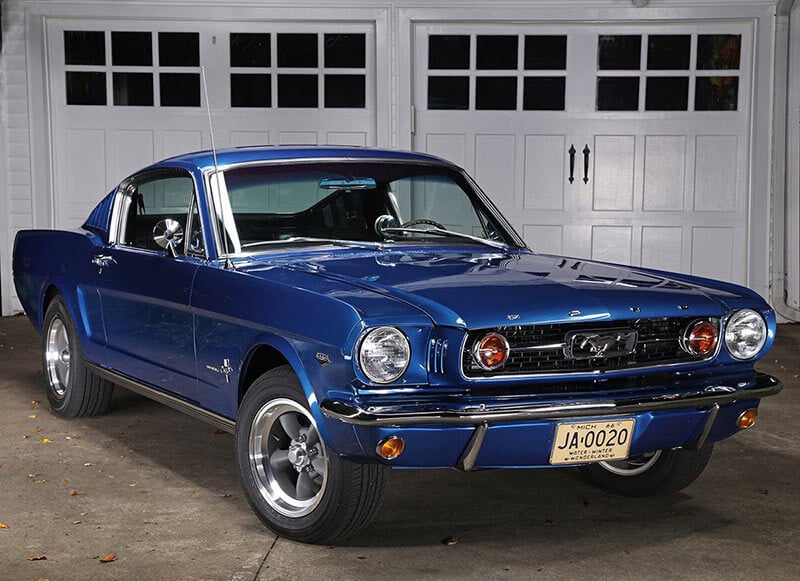
The GT Mustangs came with standard fog lights that were mounted on the Mustang’s grille. The factory-installed fog lights were punched through the grille rather than drilled. If you look under the hood on the other side of the hole you’re likely to find an unclean lip edge rather than a neater drilled hole. The fog lights required additional support, so there are support bars on both the 1965 and 1966 GT. If you want to learn how to install aftermarket fog lights on your classic Mustang, check out our in-depth guide.

1965 vs 1966 Mustang Fender
Though both the 1965 and 1966 Mustang have a pony emblem on the fender behind the front wheel, the GT badge took the pony’s place of honor on all GT models in both 1965 and 1966.
Though this badge is helpful to look for, it’s one of the easiest things to change out, so if your classic Mustang has been restored, it’s possible that its fender branding has changed.
The rocker panel of the 1966 Mustang featured chrome molding as well, which was available as an option on the 1965 model that could be added for $27, roughly $216 when adjusted for inflation.
On the GT’s rocker panel, “Mustang” is spelled out with individual pins on a stripe.
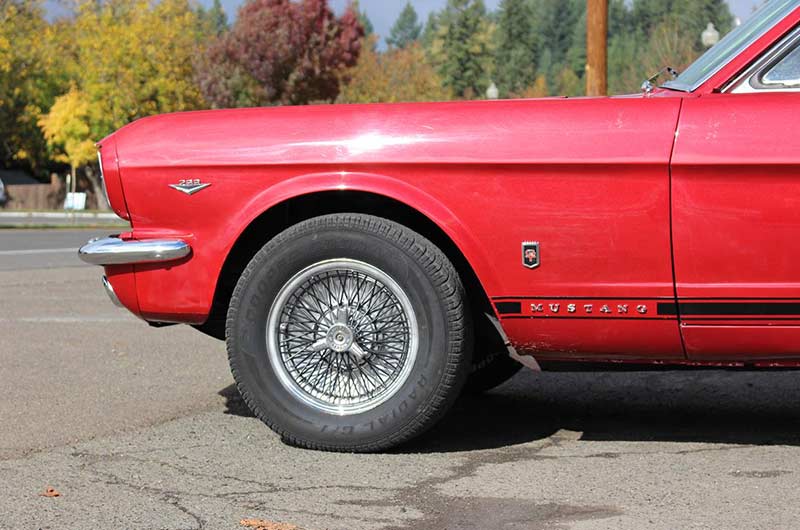
Quarter Ornament Differences Between ‘65 and ‘66 Mustangs
The ’65 Mustang only has a single ornamental scoop that is deep enough you can slide your hand into the molding along it.
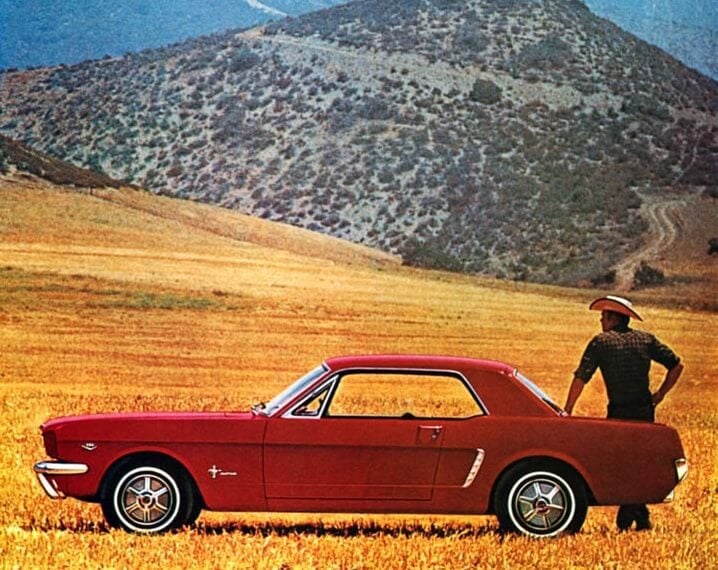
The ’66 Mustang has a quarter ornament that features three horizontal sweeps. The ’66 ornaments are much thinner as well, and they lay flat with the body of the car, so you won’t be able to slide your hand into it. These horizontal sweeps are accented with chrome which matches the rocker panel.

The ‘65 and ‘66 GT have the single side scoop like the ‘65 model; the ‘66 GT also didn’t get the updated chrome rocker panel.
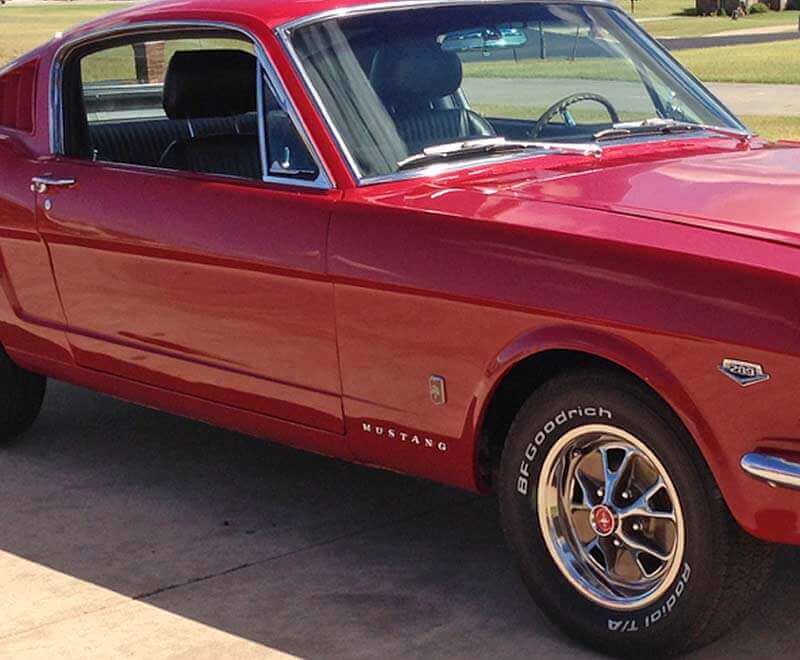
1965 vs 1966 Mustang Gas Cap
The gas cap of the 1965 Mustang has three pronounced notches along its sides. In the center, the logo is flat on the gas cap’s surface.

The 1966 gas cap has small ridges all the way around its circumference. In the center, the Mustang logo protrudes.

1966 GT Mustangs had GT in the center of the gas cap instead of the pony logo, but 1965 had no such lettering on its gas cap.
1965 and 1966 Mustang GT Exhaust
GT Mustangs from 1965 and 1966 all came with standard dual exhaust with trumpet-style tips. This exhaust exited the vehicle through the rear valance, giving it a sculpted built-in feel. To verify you are looking at a true GT and not an aftermarket creation, you can check on the rear frame rails. The exhaust hanger brackets are punched instead of drilled, just like the supports for the fog lights.

1965 vs 1966 Mustang Brakes and Suspension
Though obviously any Mustang could have been outfitted with them later (and we definitely recommend them as an upgrade), front disc brakes only came standard on GTs in 1965 and 1966. The GTs also had improved suspension components. They sported stiffer springs and heavy-duty shocks.
Instrument Cluster
The series of gauges and dials commonly referred to as the instrument cluster is full of valuable information, including figuring out the year of your Mustang! In 1965, the Mustang borrowed from the Falcon, and the instrument cluster was rectangular.
You can see a close-up of this instrument cluster in this video where Bill guides us through the installation process for this particular instrument cluster.
By 1966, Mustangs had moved to circular instrument clusters that used gauges to measure important information instead of the 1965 “idiot lights.” These were available as an upgrade on the ‘65 but they came standard in GTs of both ‘65 and ‘66. If you're looking for an aftermarket upgrade to your Mustang's gauge cluster, consider adding a classic Mustang rally pac.


Vehicle Identification Number
When in doubt, refer to the Vehicle Identification Number, or VIN. Make sure to check the VIN in two locations, since a replacement part would have a different VIN than the original car and is not always obvious.
You can find the VIN number in the engine compartment on the driver’s side fender apron, inside the car where the windshield and dash meet, or on the door jamb of the driver’s side door.
The original data plate is a great place to find the VIN of your classic Mustang if it’s still there. Unfortunately, the original data plate is installed on the driver’s side door, a place susceptible not only to rusting but also to external damage.
The first number of the VIN will tell you the year it was constructed. A six, for example, indicates that the vehicle was manufactured in 1966. The engine code will be the fifth character and is represented by a letter that corresponds to the available engines of the time. A GT will always have either an A or a K here since those were the only two engines the GT package was available with.

Please keep in mind that this guide is meant to be informative. It’s incredibly difficult to tell these vehicles apart accurately 100% of the time because of the numerous options available at the time of purchase. Additionally, as these vehicles get older and more restoration is required the differences become even more obscured. It’s never a bad idea to get a second, or even third, opinion before investing in a classic Mustang. If you do end up purchasing one of these classic cars, then be sure to check out more classic Mustang parts.
If you what to learn more about other classic Mustang models, check out the rest of our classic Mustang comparisons below.
- 1964.5 vs 1965 Mustang
- 1966 vs 1967 Mustang
- 1967 vs 1968 Mustang
- 1968 vs 1969 Mustang
- 1971 vs 1972 vs 1973 Mustang
Sources:1965 Mustang Brochure, Ford| 1966 Mustang Brochure, One Man and His Mustang| 1965 Mustang Paint Colors, UreChem | Mustang and Shelby Engine Specifications, Classic Pony Cars Image Credit: My Classic Garage | Classic Car Marketplace


