
Mustang Restoration Chapter 2: Selecting Your Project Mustang
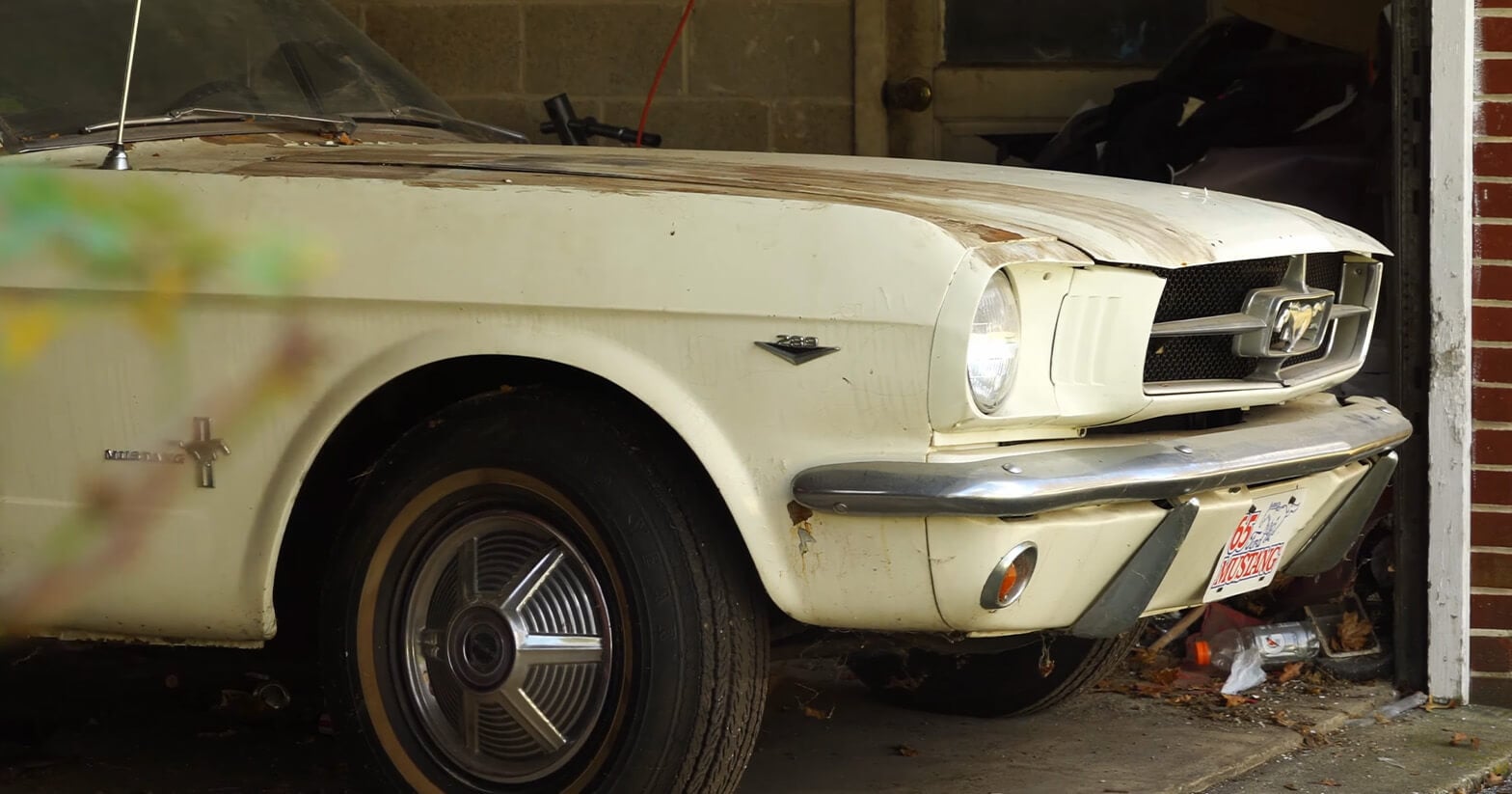
Last Updated November 25, 2025 | Meghan DrummondOnce you've decided what your end goals are for your restoration, it's time to select your project car. For some, this is the easiest part of the process, for others it may be tedious. If you have a family-heirloom, barn find Mustang, or other classic that's fallen into your lap, you're luckier than most.
Hunting for an ideal project car can be as intense or light-hearted as you'd like it to be. If you have your heart set on a specific year and model, your hunt will be much more challenging than if you were interested in a wide range. We're not saying this to dissuade you. Knowing what you want is valuable, but it's also good to prepare yourself for the time frame you're looking at.
The good news is that millions of Mustangs were sold in the first generation. Some of these were kept in pristine condition, while others could now best be described as scrap metal. But the vast majority of first-gen Mustangs exist in the middle-restoration territory.
Before you get to hunting though, there are several things to keep in mind.
Covered in this Chapter
- Vehicle Condition Grades - Learn how to evaluate vehicle quality
- Year-to-Year Differences - Figure out which Mustang years meet your needs
- Where to Look for a Project Mustang - Successful ways to narrow your search
- Kicking the Tires - Checklist for your in-person evaluation, including tricks and hidden areas
Vehicle Condition Grades
Whether you're looking at price guides or trying to get a feel for how much work is necessary, understanding condition grades will help when you go project car shopping.
The better condition a classic Mustang is in, the higher the upfront cost. However,the other costs of restoration will likely decrease accordingly. Unless you have a very advanced skill set, it's often better to buy the nicest car you can afford.
For example, if you're looking for a show-quality car, and you buy one that just needs a quick interior restoration, you'll likely pay more upfront but less on the total cost of restoration. But if you pick up a Mustang that's in horrible condition, you'll probably pay very little upfront but spend more on the total restoration. Keep in mind that certain things, like metalwork and paint, can be far more expensive to repair than interior.
Most people aim for dead center on this spectrum: A Mustang that needs lots of work but has most of its body intact.
Vehicle Condition Grading System
Condition One: Exceptional | Condition Two: Great | Condition Three: Very Good | Condition Four: Drivable | Condition Five: Fixable | Condition Six: Parts Car
Starting in the 1970s, most automotive guides adopted a six-level grading system. This grading is a baseline for approximating the amount of work that will need to be done. It's also used to determine a fair price.
Like any system, grading is very subjective so use your best judgement. But overall, it's a good preliminary guide to understanding the conditions of classic Mustangs.
Condition One: Exceptional
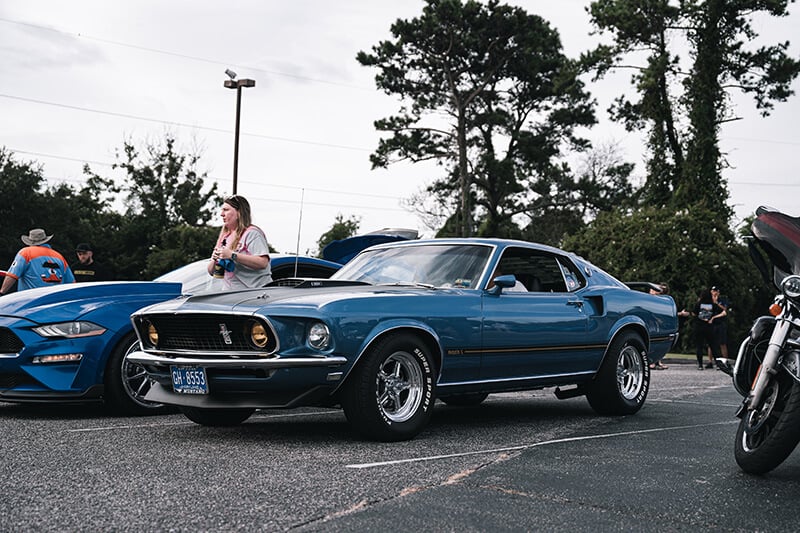
If you're looking for a project car, you're not looking for a car in this kind of condition. These Mustangs are post-restoration, or mint condition survivors, and are show-ready. These Mustangs are most likely not driven, and are by far the most expensive.
It's highly unlikely you'll find anything of this caliber locally. Condition one Mustangs are more likely being sold through major auction sites.
Though you're not looking to buy a vehicle in this condition, it's still worth looking at postings for them. Looking at condition one cars can give you a much better look at what a finished project may become with some time and money invested.
Condition Two: Great
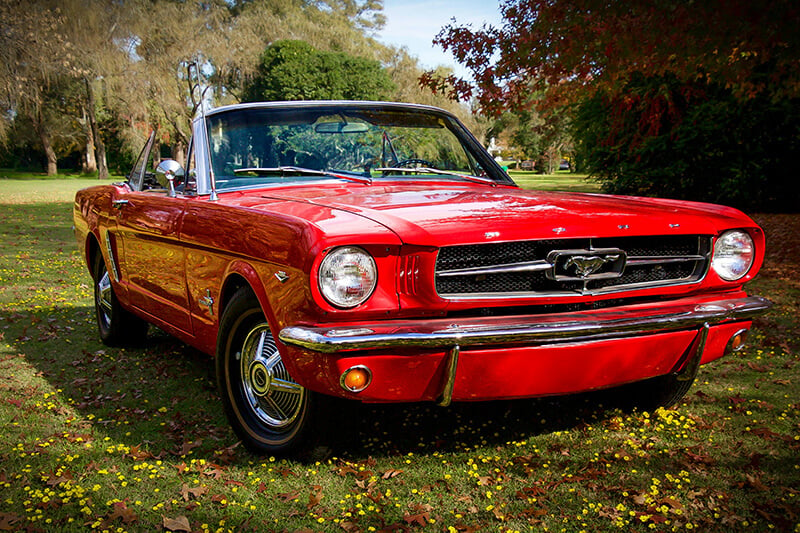
A vehicle in this condition is still far from a project car. Like a Mustang in the “exceptional” category, these cars are probably post-restoration or solid survivors. Though they're perhaps not as “perfect” as condition one Mustangs, these cars can still easily win local events and stop traffic on the way. They're also more likely to be driven rather than trailered. As a result, they may have areas that are slightly less than perfect.
Condition two Mustangs are still borderline criminal to pick up for a restoration, but they may also be far cheaper to build into an exceptional car. They're also as pricey as you'd expect for a collectible Mustang that's been restored or well-preserved.
Condition Three: Very Good
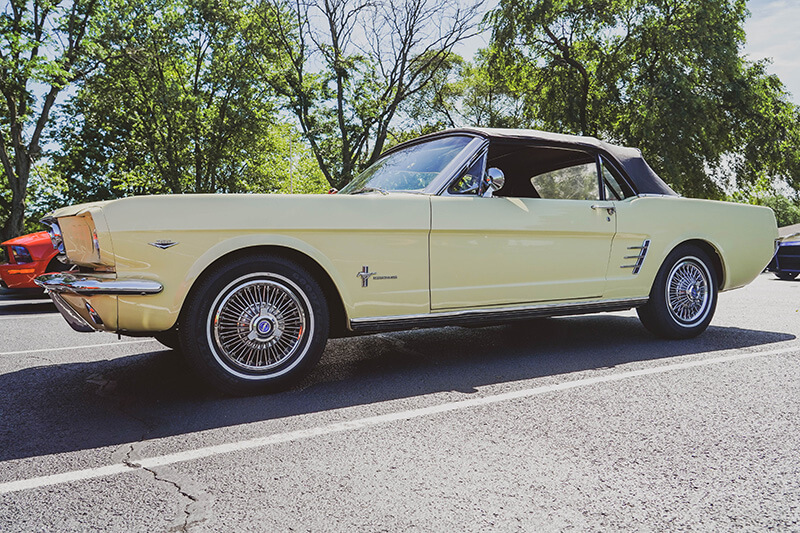
Condition three Mustangs can make great candidates for a restoration. This is the top quality you'll find for a project car. It should already run as-is, and your focus will be on fixing aesthetics or worn internal components.
Many Mustangs in this condition were someone else's project car that they abandoned, either due to finances or a change in interest. Many times they simply bit off more than they could chew. If you're buying, it's good to feel out if this may be the case. There's always an off chance that they abandoned the restoration for a mechanical reason that would be a deal breaker for you. They also might have some parts you can pick up as a package deal.
Condition Four: Drivable
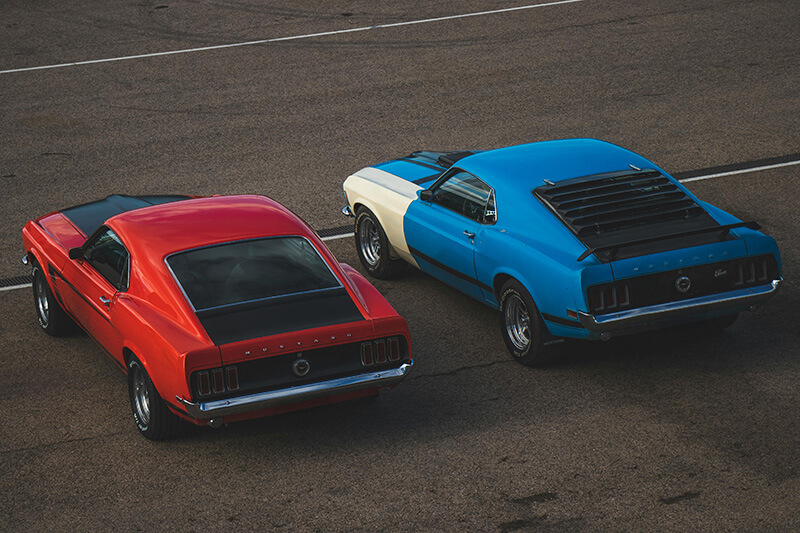
These Mustangs are priced much more desirably for project cars. You can usually drive a Mustang in this condition home, but it won't be long before you notice some issues. While a condition three Mustang may have a few rough spots, level fours may have dents, dings, or small rust patches.
These problems require a lot of time and care to address, but that's why there's a huge price difference between condition three and four Mustangs.
While you have the option of taking your time with a condition three car, one in condition four might need a little more speed. Small rust spots can spread quickly over time, and without a quality coat of paint, there's the likelihood of picking up even more rust.
Drivable cars are actually the perfect condition for many restoration projects. They'll give you the opportunity to work on the mechanical aspects of the vehicle, some body and paint work, and interior restoration.
Condition Five: Fixable
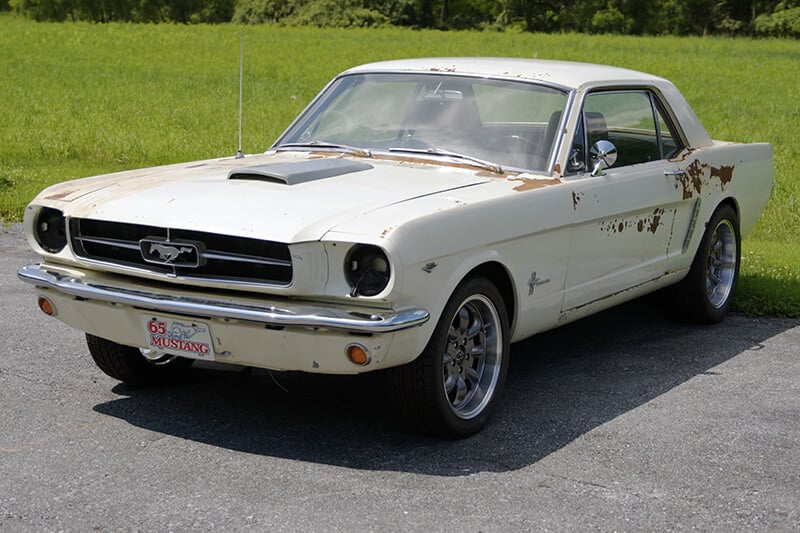
Mustangs in this condition are especially desirable for people who love a challenge and have the skill set to perform a full restoration. These are the classics that don't just want to be restored, they need to be restored to become operational. It's likely these Mustangs don't run, and you'll probably have to replace entire body panels.
Picking up a Mustang in “project” condition is much more challenging since you'll need a trailer to get it. You'll also need a place to store it where it won't be further exposed to the elements, like a garage or carport.
Though project condition Mustangs can be had for a song, the time and parts necessary to repair them makes them impractical for many. Oftentimes, cars in this condition will cost more to restore than a finished car would be worth.
However, if you're up for the challenge, they're perfect for that long-term restoration many hobbyists crave. The best part about restoring a Mustang in this condition is that, in many ways, it's a clean slate. Instead of trying to restore the existing paint and components, you can go with whatever you like.
Restoring a classic Mustang in this condition is a great way to preserve history and save a first-gen Mustang from the scrap heap.
Condition Six: Parts Car
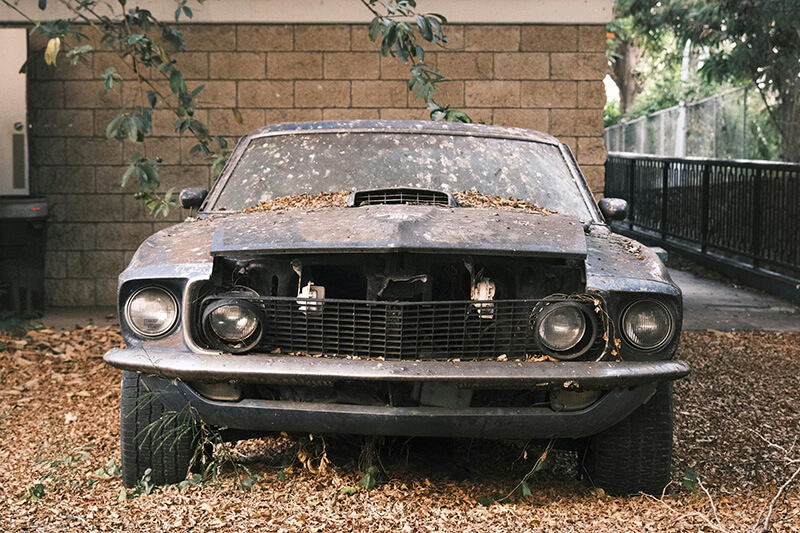
Honestly, unless it's a very rare example, it's hard to justify bringing a classic Mustang in this condition back. These cars may have been in a catastrophic accident, or have a chassis so bent it will never be safe to drive again. If it weren't for some remaining pony badging, you might not even know there's a Mustang under there. These are typically best used as parts cars.
If you're looking at a condition five restoration project, it may be worth purchasing a condition six vehicle as well. They're fairly inexpensive and can be a good donor car to take parts from.
Year-to-Year Differences
Not all first-gen Mustangs were built the same, so you'll want to know which features were available during which years.
There are four major periods in the Mustang's first generation.
- 1964.5-1966
- 1967-1968
- 1969-1970
- 1971-1973
| Dimension | 1964.5-1966 | 1967-1968 | 1969-1970 | 1971-1973 |
|---|---|---|---|---|
| Wheelbase | 108" | 108" | 108" | 109" |
| Length | 181.6" | 183.6" | 187.5" | 189.5" |
| Width | 68.2" | 70.9" | 71.7" | 74.1" |
| Height | 51.2" | 51.6" | 50.5" | 50.1" |
| Base Curb Weight | 2,445 lbs. | 2,758 lbs. | 3,122 lbs. | 3,560 lbs. |
Throughout the first generation, the Mustang got progressively larger every few years. The dimensions are far from the only or most obvious difference, though. Everything about the Mustang changed, from the slope of the hood to the engine options.
While it's good to have an ideal set of factory components in mind while you're shopping, it's also good to know that some options are rarer and harder to get than others.
If you're really drawn to the K-code HiPo engine from the first several years, you're far from the only one. Unfortunately, not a whole lot of them were sold. For almost every year the Mustang was produced, the six-cylinder model outsold the eight-cylinder. That makes the six-cylinder much easier to find and less expensive.
The six-cylinder Mustangs can easily be upgraded to eight-cylinder, but many components besides the engine will have to be replaced. V8 swapping a six-cylinder Mustang is popular because there are so many great condition six-cylinders available. Plus, a lot of the V8s were driven fast and hard. But if you are planning to go the concours route, you won't have this option. Instead, you'll have to get the factory parts for the model you select.
1964.5-1966 Mustangs
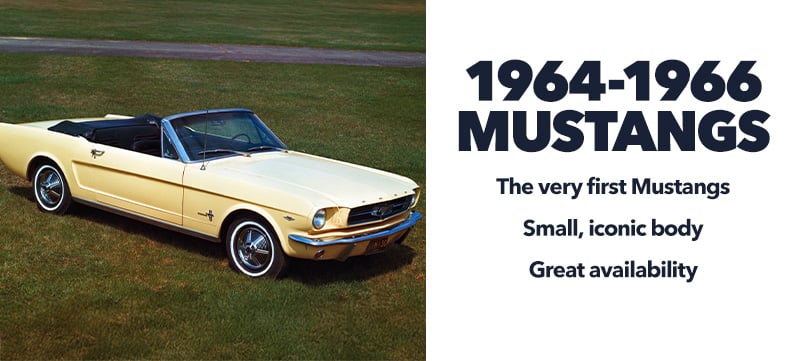
The Mustangs created between 1964 and 1966 are some of the toughest to tell apart. They all adhere closely to the ideals Lee Iacocca and the Fairlane committee envisioned: A car that weighed under 2,500 pounds and cost under 2,500 dollars.
Despite their similar looks, there were significant changes during this two-and-a-half-year period. Still, their looks are close enough that you're unlikely to find anyone who loves the 1965 and hates the 1966.
Some of the biggest differences for the 1964.5 Mustang are under the hood. For example, the '64.5 has a generator, while most 1965 Mustangs have an alternator. Alternators are better than generators for cars since they sustain less wear and tear and can put out consistent power. Cars with generators are such an oddity that they make for great collectability. Parts for generator-equipped cars are still available, so either can be restored.
The engine lineup for 1964.5 and 1965 was also almost entirely different, while '65 and '66 shared the same engine options. The only engine the 1964.5 and 1965 shared was the highly desirable 289 CID K-code, which was the largest and most powerful V8 available. The K-code carried over to 1966 as well. For this reason, someone looking for a driver restoration caliber first-gen might prefer a 1965 or 1966.
The benefits of this sub-generation are that they're small, light, and abundant. They also have that obviously classic look that draws a lot of people to the first-gen Mustang to begin with.
1967-1968 Mustangs
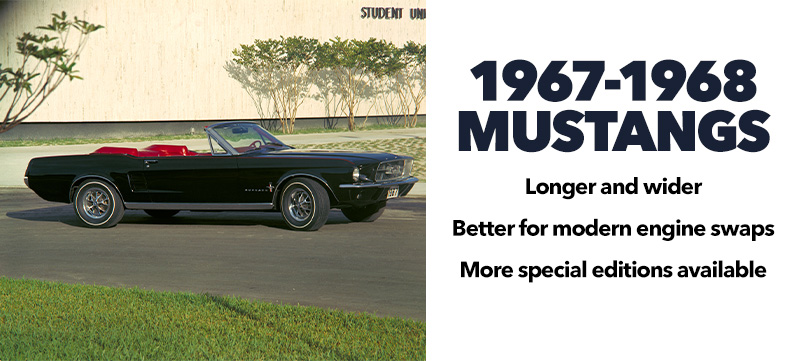
The 1967 and 1968 models carry a lot of the styling cues of the first Mustangs: they're just a bit longer and wider. Though many of the people who worked on the first Mustang later complained about how large they got, the first size increase was deliberate.
By increasing the size of the Mustang, Ford could finally offer a big block V8 in addition to the small block. So if you've got your heart set on a modern overhead cam engine swap, you'll likely want to look at Mustangs made in 1967 or later. However, the swap can be done on any first-generation Mustang.
Ford was also producing a large number of special edition Mustangs at this time. As a result, there are a lot of '67-'68 Mustangs that may be good candidates for a full show restoration. Finding a California Special or a High Country Mustang in good condition is rare, and enthusiasts love seeing them at shows.
Another rare find is a Mustang from this era equipped with the Cobra Jet engine. This highly desirable engine was available in all three body styles. The desirability of this option means you're unlikely to find one, but keep your eyes peeled! Cars with rare options like this are great restoration candidates, even if they aren't in great condition.
Other than the dimensions, the differences between the '66 and '67 Mustangs were largely aesthetic. The taillights are concave rather than convex, the rear gained a ducktail, and the deluxe interior got a better gauge cluster. These changes meant that every single piece of external sheet metal changed. Even the suspension changed.
1969-1970 Mustangs
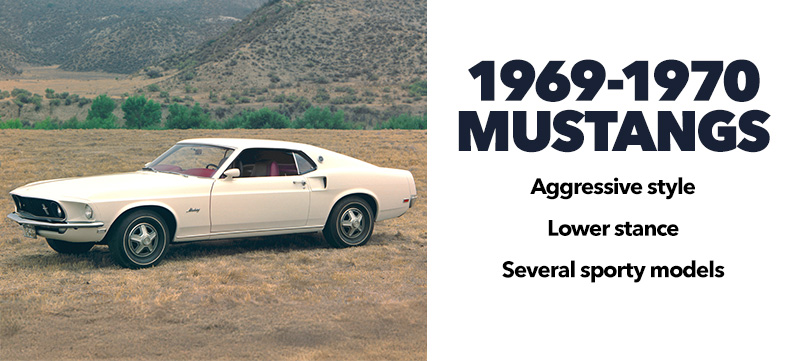
The 1969 and 1970 models were larger still, and, thanks to some new designers, had a much more aggressive style. The double headlights for 1969 are perhaps the most imposing physical change. But the '69 Mustang was also lower than it had been in previous years, giving it a sportier appearance.
There were multiple performance options for these years, including the Mach 1, Boss 302, and Boss 429. Their hot rod style spread to other Mustangs of the era, and you could even get a non-special edition Mustang with a Cobra Jet under the hood. This era also saw some of the most robust engine options.
Finding a Mach 1 or Boss Mustang is challenging. But if you're not interested in a show grade restoration, you can easily create your own using the base Mustangs of the era.

Quick Fact:
Larry Shinoda, designer of the Boss Mustangs, was a noted hot-rodder. Many of the design changes that made the Boss Mustangs more performance-focused are changes hot-rodders frequently made to their stock cars.
1969-1970 Mustangs are great candidates for a variety of restorations. Since these Mustangs were built to handle large performance-oriented V8s, they make great drag cars. The spacious engine bay also opens up the option for more adventurous engine swaps.
Special editions from this era are particularly sought after, and are well worth going through a show restoration for.
1971-1973 Mustangs
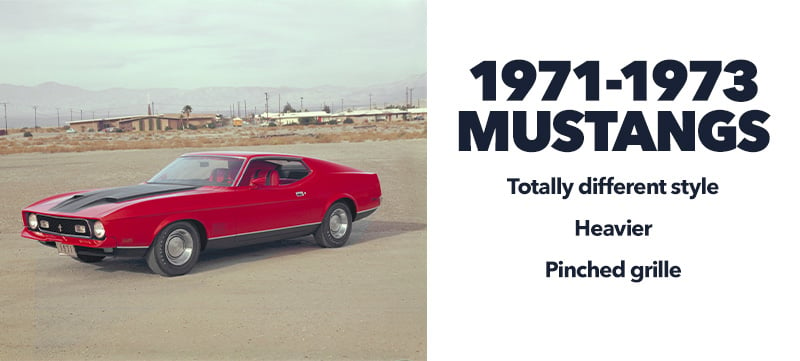
The 1971-1973 era is perhaps the most divisive. The grille area, in particular, is one of those things you either love or hate. But that's great news if you like the style of these Mustangs.
This sub-generation lost the double headlights of the previous one. It also had a grille area that almost appeared to be pinched and turned downward at the end of a long hood. Though this is the heaviest and bulkiest first-gen Mustang, with the right styling it can still look sporty, as proven by the Boss 351 and Mach 1.
The look of these Mustangs is so different from the rest of the first generation that many consider them their own separate entity. But that completely ignores the actual construction of these Mustangs.
They share the same basic body construction, the same spring and shock system, and the same suspension. Most of the components are still cross-compatible.
Where to Look for a Project Mustang
The condition of the Mustang you're looking for is going to impact where you start looking for it. While you might find a vehicle that's in near-perfect condition on Mecum or Hagerty, you won't find parts cars there.
Likewise, while your local junkyard might have tons of Mustangs for part donation, they're less likely to have something drivable.
Locally
Your local dealership may be worth contacting. They may not have what you're looking for at the moment, but you can always leave your name and number with a salesperson. Just let them know to give you a ring if they get in a car in the year and condition that you're interested in.
Facebook Marketplace and Craigslist are also worth checking out. They can be a challenge to sort through, but there are plenty of stories of people finding their dream vehicle for a song.
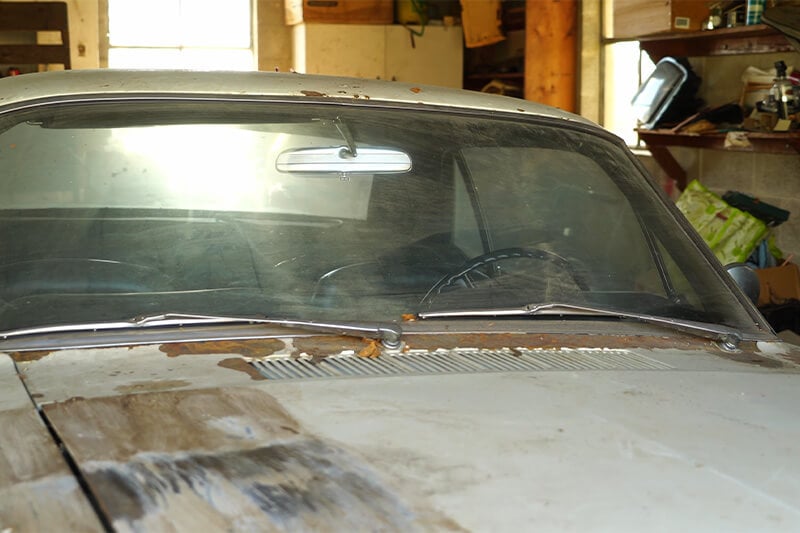
Private sales and word of mouth can be a hidden source of great classic Mustangs. If you don't get out around your neighborhood, it can be enough to share that you're looking for a restoration-grade Mustang with friends and family. More pairs of eyes can help you find what you're looking for. And when word gets around that you're looking for a classic Mustang, it's possible your project car will come to you.
Local Enthusiast Groups, like your Mustang Club of America chapter, are a great way to find cars that aren't advertised. This is also where you may find others who have started or completed a restoration. Not only can these people be a great source of information, but also a great network of support. When you need to brainstorm about how to fix a restoration problem creatively, you'll be glad to have a few people nearby who can help out.
Auction Sites
There are a variety of auction sites you can check online. What these sites offer can vary. There are collectible sites, like Mecum and Hagerty, that specialize in selling the cream of the crop. Auction sites like eBay and Bring a Trailer tend to have a little more variety, with a broad spectrum of conditions, prices, and models.
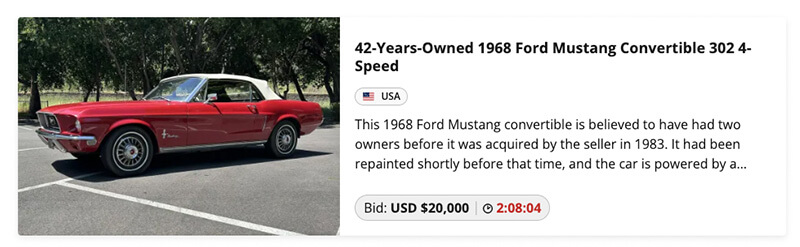
There's one major disadvantage to purchasing a vehicle this way. While sites and sellers try to be upfront about what problems a vehicle may have, you're ultimately buying it sight-unseen.
Salvage Auctions
Depending on your state, there may be local salvage auctions in your area. Though these can be hit or miss, there are a lot of stories of people finding great Mustangs at these. Salvage vehicles are those that have been deemed a total loss by an insurance company, but that doesn't mean they're actually a total loss. Some vehicles are relegated to salvage even if the damage is purely cosmetic. Hail damage is a great example of this.
If you decide to go to a salvage auction, you'll want to review the laws on converting a salvage title into a rebuilt one. Some states require step-by-step evidence of a total upgrade, and it's easier to collect documentation throughout the process than it is to assemble afterwards.
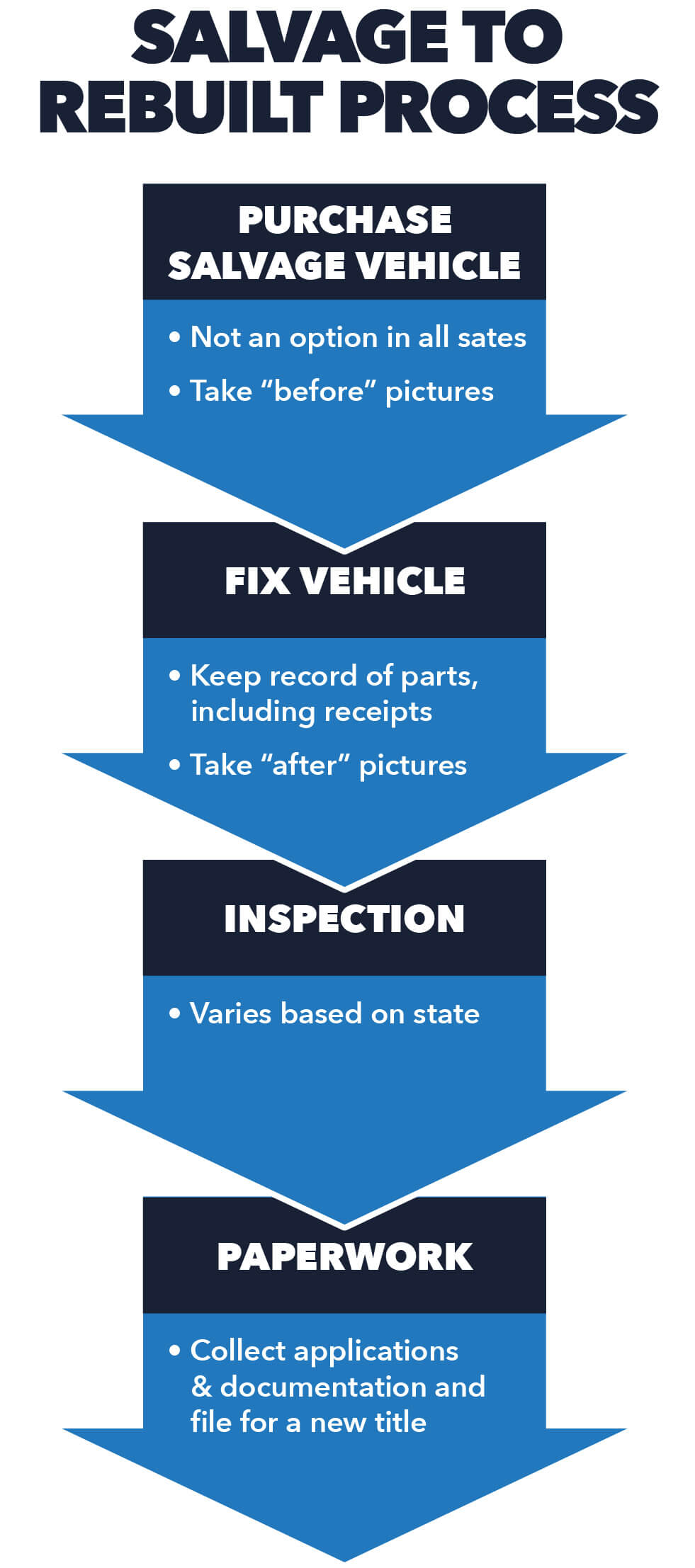
When looking for a salvage vehicle, it's good to bring along a friend who knows the process of restoring a classic vehicle. Though some issues are easy to fix, others can appear minor and then turn into a nightmare. Good examples of this are electrical issues or chassis damage.
Kicking the Tires
Depending on where you've found your potential Mustang, it may or may not be possible to physically evaluate it. Although it's one of the most emphasized steps of the car buying process, it's not always practical to check before making a purchase. Especially now that more sales are conducted online.
Regardless of whether you've already exchanged cash, the first physical evaluation is important. It can prevent you from making a regrettable purchase, expose hidden issues, and give you an idea of what repairs you're looking at.
It's also when you first get a feel for whether this is “your” Mustang or not.
Though this is a good list of items to check, there's no way to evaluate everything during a sale. A good rule of thumb is to assume that for every issue you manage to find on a first look, there's likely another you haven't found yet.
Rust
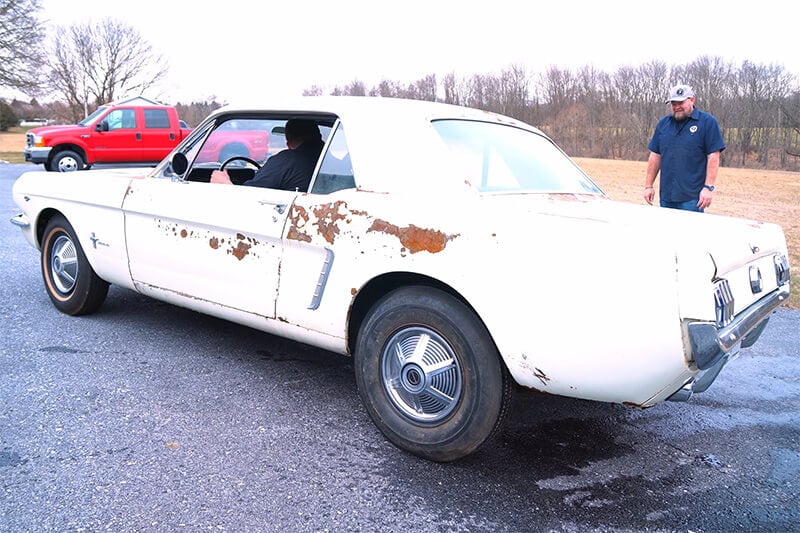
One of the first things classic car shoppers look for is rust. There are several locations that are especially prone to rust where you should look carefully. While evaluating these locations, one useful tip is to not simply trust your eyes, but to actually run your fingers along the area. Some quick repairs can make rust damage hard to see. If it's been improperly done, you'll be able to feel the bubbly/dusty texture of the rust underneath.

Another tip is to bring a magnet for evaluation. If the magnet responds to the area, it's likely that the sheet metal is still there and intact. If the magnet doesn't respond, then it's likely that the area has been quick-patched with a substance like Bondo. There's nothing wrong with a Bondo-patch, but if the owner has told you it's in perfect condition with no major repairs, then they were obviously lying. It would then be very difficult to trust anything else they have to say. Make sure your magnet has a cloth cover if the car is painted so you do not damage the paint.
- Where to Look
- Rocker panels
- Wheel wells
- Inside fenders
- Bottom edge of doors
- Quarter panels
- Inside cowl area
- On the floor underneath the carpet
- Frame rails
You will need to address any rust you find in these areas, so you should use that to negotiate on the price if possible. Given the age of classic Mustangs, it's understandable if even a well-kept pony has a little rust.
How Much Rust Is Too Much?
Rust can be a pain to fix, but it's almost always fixable. Most of the time, minor rust shouldn't be considered a dealbreaker.
Rust can become a deal breaker if it's affecting the frame rails. The frame rails are crucial to the structural integrity of the vehicle. While rust in other areas can be sanded away and the sheet metal patched, you don't want a patch on your frame rail.
Rust can also be a deal breaker if it's excessive. You'll need at least some rust-free sheet metal to attach patches to. Excessive rust also indicates that the Mustang was not cared for the way it should be.
The Interior
A rough-looking interior is usually a great sign for people looking for a restoration Mustang. Not only is the interior one of the least expensive areas to restore, but it's also fairly easy. A rough interior tends to knock a good amount off of the price. If the seller hasn't fixed it themselves, they probably care more about making a quick sale than squeezing every penny out of their Mustang.
Sometimes those quick repairs can be a red flag. They're often made hurriedly and without the kind of love that makes quality restoration work stand the test of time.
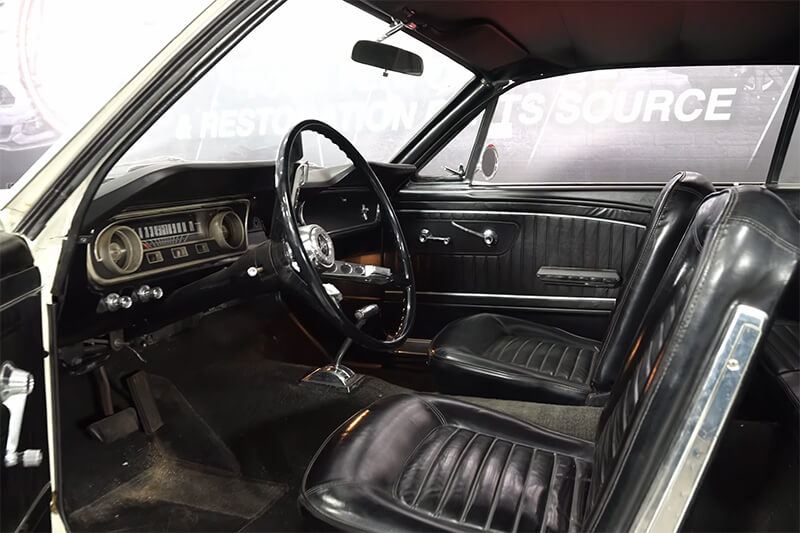
If there are curious new parts, like a perfect headliner in a vehicle with rust in the floorboards, ask the owner about it. It's possible they wanted to do a restoration and then realized they were in over their heads. It's also possible that they were trying to make a quick buck. If that's the case, there may be other hidden issues you'll want to look out for.
Some interior restoration items can add a lot of additional cost. One of those items is a new headliner.
Replacing a classic Mustang's original style headliner requires removing the front and rear windshields. Getting this done professionally can be very expensive. If you're comfortable doing it on your own though, this is another area where you can save a lot of money. Just be careful removing and reinstalling the front and rear windshields.
The Test Drive
If you're looking at a Mustang that's in drivable condition, you should take it for a test drive. Put it through its paces by shifting through all the gears, testing the brakes, and seeing how it handles around corners.
In a Mustang that's mechanically sound, every shift and brake should come without hesitation or too much noise. That said, presumably you thought this would be a good restoration candidate for a reason, and one of those reasons is likely that not every component is factory-perfect.
As with any car, if you have the ability and time to take it to a mechanic during this test drive, you should. They'll be able to give you several options to check the soundness of the engine, such as a compression or leak-down test, which will tell you how healthy it is and if it's been well-cared for.
Decide in advance what repairs are and aren't beyond your ability and budget. If you're planning on doing a full engine swap anyway, then the condition of the engine and transmission probably don't matter.
During your test drive, you should drive it long enough that the engine gets warm. This will help you detect any leaks or heating issues that may affect the mechanical components.
After the test drive, park the still-warm Mustang on a stretch of clean pavement. This makes finding leaks relatively easy.
Test Drive Checklist
Check out our full Classic Mustang restoration guide to learn everything you need to tackle your next project.
Image Credit: Ford Heritage Vault


